Tuesday, November 03, 2009

Dutch Covers

Picture books from 1810 to 1950


Het gouden prentenboek  1898 - 1948 by Piet Worm, 1948

'Het Gouden Prentenboek' [1898 - 1948] by Piet Worm, 1948


Wat Hansje zag by Dick Poortvliet, illustrated by van Douwe Nieuwenhuis, 1948

'Wat Hansje Zag' by Dick Poortvliet,
illustrated by van Douwe Nieuwenhuis, 1948


Uit huis en hof by Konrad Mullerfurer, 1921

'Uit Huis en Hof' by Konrad Mullerfurer, 1921


Aapjes-land by Ajo 1923

'Aapjes-Land' by Ajo, 1923


1898-De koningin op reis-1923, published in Amsterdam, 1923

'1898-De Koningin op Reis-1923', published in Amsterdam, 1923


De gouden haan - Marietje Witteveen 1940

'De Gouden Haan' by Marietje Witteveen, 1940


De olifanten en de muisjes - naar het Hoogduitsch by Agatha, 1876

'De Olifanten en de Muisjes - Naar het Hoogduitsch' by Agatha, 1876


De drie katjes - met rijmpjes van Alice Becht-Dentz, 1905

'De Drie Katjes - met Rijmpjes' by Alice Becht-Dentz, 1905


De reis naar de maan  by PJ Andriessen, 1876

'De Reis Naar de Maan' by PJ Andriessen, 1876


Avontuur van Keesje Holland by Piet Broos, 1945

'Avontuur van Keesje Holland' by Piet Broos, 1945


De koningin der poppen, printed in Amsterdam, 1867

'De Koningin der Poppen', printed in Amsterdam, 1867


De circus  by Ant. L. de Rop, 1890

'De Circus' by Ant. L. de Rop, 1890


De luchtballon van Godard en Kermisvreugde published by A Tjaden, 1875

'De Luchtballon van Godard en Kermisvreugde'
published by A Tjaden, 1875


De wilgen by Adama van Scheltema, illustrated by Rie Cramer, 1918

'De Wilgen by Adama van Scheltema', illustrated by Rie Cramer, 1918


Dieren prentenboek -  silhouetten,  Reyer Stolk h

'Dieren Prentenboek: Silhouetten' by Reyer Stolk, 1945


Generaal Jan Klaasen by Beata, 1896

'Generaal Jan Klaasen' by Beata, 1896


historic dutch childrens book anthropomorphism cats dancing

'Juffrouw Ruffel en Hare Zeven Geleerde Poesjes',
published in Utrecht, 1823


Het theesalet van Pieteloet by Agatha, 1860

'Het Theesalet van Pieteloet' by Agatha, 1860


Het prentenboek der sporten by Yvonne, 1912

'Het Prentenboek der Sporten' by Yvonne, 1912


Landelijke tafereelen published by J Scholz, 1860s

'Landelijke Tafereelen' published by J Scholz, 1860s


Iconomanie of Zoo maken de kinderen een prentenboek published by J. van Egmond, 1869

'Iconomanie of Zoo Maken de Kinderen een Prentenboek',
published by J. van Egmond, 1869


Levend speelgoed. Een grappige droom by B.E. van Osselen-van Delden, 1903

'Levend Speelgoed. Een Grappige Droom'
by B.E. van Osselen-van Delden, 1903


Het feest van Koning Beer by Louis Moe, 1930

'Het Feest van Koning Beer' by Louis Moe, 1930


Een vogel zong een tooverlied, illustrated by Ursula Schumacher, story by Nora Heggen, 1942

'Een Vogel Zong een Tooverlied',
illustrated by Ursula Schumacher, story by Nora Heggen, 1942


Eerste en laatste by El Pintor, 1943

'Eerste en Laatste' by El Pintor, 1943


Feest in het bosch, story by Jac. van der Klei, illustrated by D. Viel, 1927

'Feest in het Bosch', story by Jac. van der Klei, illustrated by D. Viel, 1927


Snakerijen van Tijl Uilenspiegel by D. Dekker, 1873

'Snakerijen van Tijl Uilenspiegel' by D. Dekker, 1873


Gouden vlinders, text by S. Franke, illustrated by Lou Loeber, 1927

'Gouden Vlinders', text by S. Franke, illustrated by Lou Loeber, 1927


Goede vriendschap by Oscar Pletsch, 1870

'Goede Vriendschap' by Oscar Pletsch, 1870


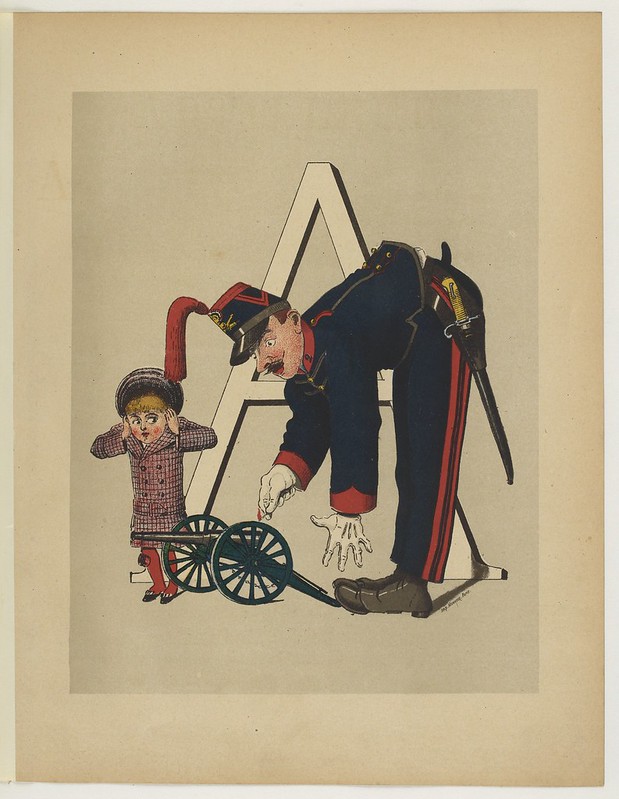
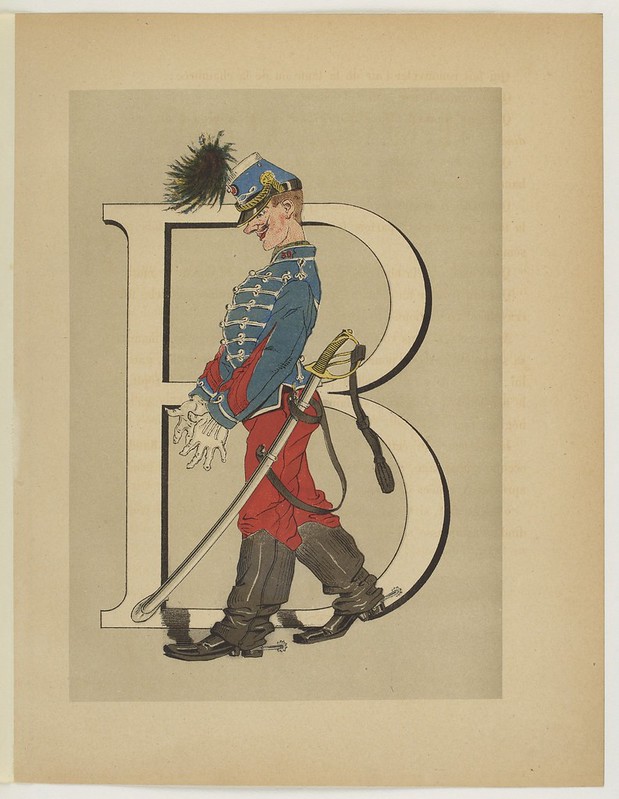
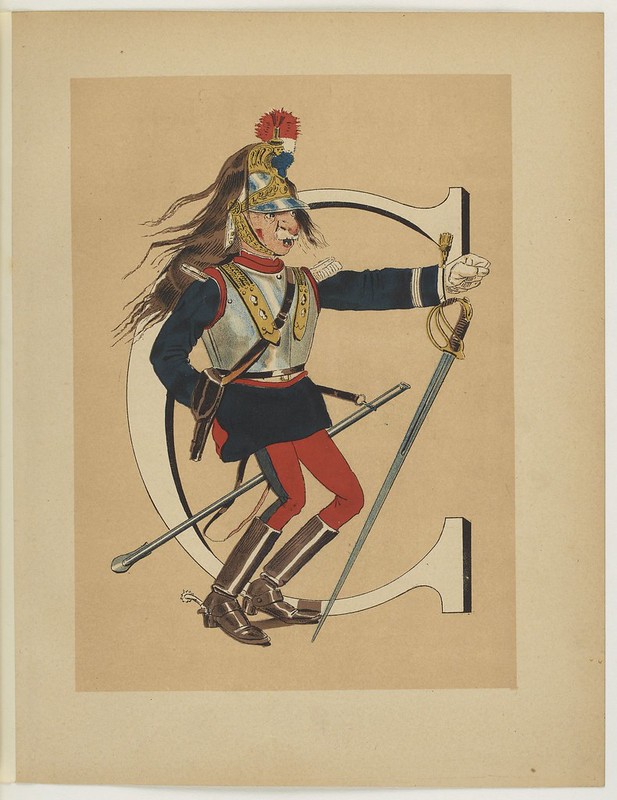
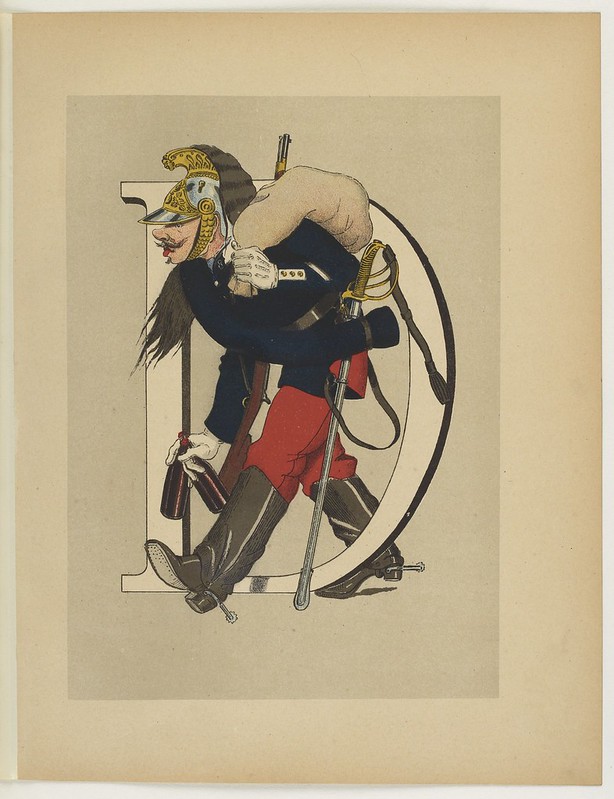
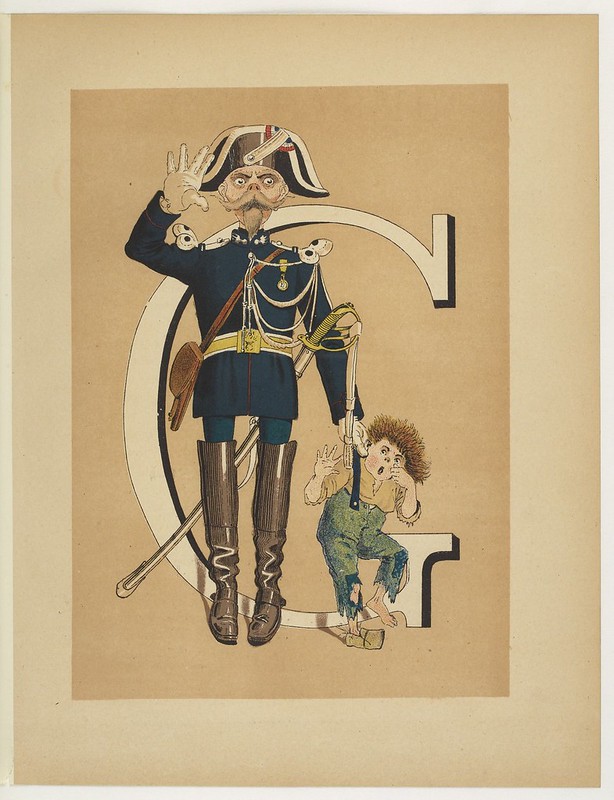
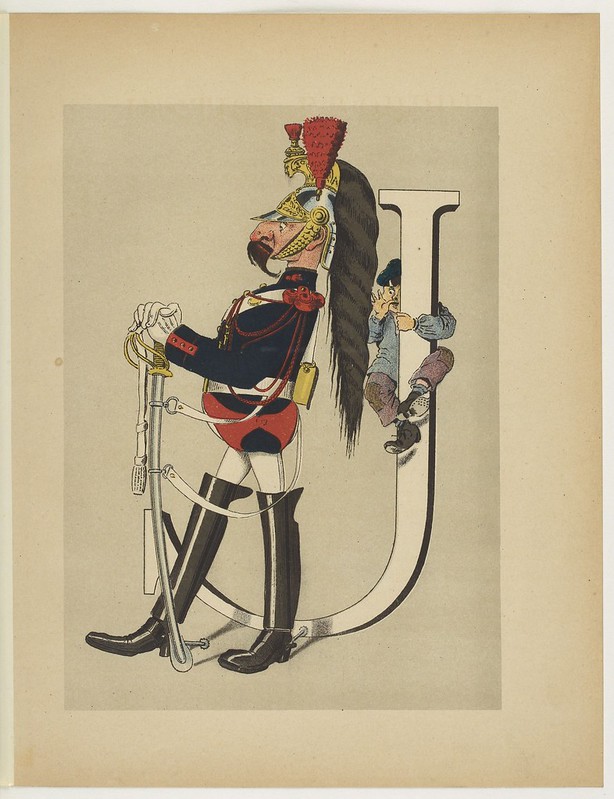
Het ABC voor Holland's kleintjes met 156 plaatjes by Daan Hoeksema, 1923

'Het ABC voor Holland's Kleintjes met 156 Plaatjes'
by Daan Hoeksema, 1923


De Struwelpetertjes - Piet de Smeerpoets, De wreede Karel, illustrated by Daan Hoeksema, 1927

'De Struwelpetertjes - Piet de Smeerpoets, De Wreede Karel',
illustrated by Daan Hoeksema, 1927


Piet Durf, hoe wonderlijk het hem verging bij het oplaten van zijn vlieger, by M.P. Rosmade, 1881

'Piet Durf, Hoe Wonderlijk het hem Verging bij het Oplaten van Zijn Vlieger'
by M.P. Rosmade, 1881


Verkeers-Prentenboek by Willy Planck, 1926

'Verkeers-Prentenboek' by Willy Planck, 1926


Pierrot, text by J. Schenkman, illustrated by Louis Raemaekers, 1907

'Pierrot', text by J. Schenkman, illustrated by Louis Raemaekers, 1907
[Raemaekers previously]


[Click through to full sized images; the above array is no particular order]

"Within the framework of youth literature, picture books occupy a special place. In picture books, the images are just as important as the texts. They are by no means intended exclusively for young children. Old picture books reflect the views people held about good and evil, poor and rich; about education, with examples of dutiful and bad behaviour; about love for one’s own country and about people from foreign countries. They illustrate a changing world of new inventions and modes of transport, of living and fashion, of daily life in towns and villages. There is both humour and moralism to be found in children’s books; they play with the relationship between reality and fantasy.

A total of six hundred and fifty Dutch picture books, dating to the period 1810–1950, are brought together in this collection, which runs the gamut from Robinson Crusoe to Tielse Flipje (a cartoon mascot on ‘De Betuwe’ jam pot labels) and from old nursery rhymes to fairy tales from the Brothers Grimm: there is something for everyone in the collection."
The Memory of The Netherlands portal assembles a multi-institutional collection of Dutch children's literature (full books) in their 'Picture Books From 1810 to 1950' website. All the navigational aids [eg. themes] and some of the notes are in English. It's a bumper collection.

Sunday, November 01, 2009

Image Dump

'Dronte'- the lost dodo portrait (17th cent.)

'Dronte' is (or was) a Dutch (and German and Danish) word for Dodo and this previously unknown sketch from the mid-1600s of the famous extinct bird was sold at Christie's a couple of months ago for ~£44K (about seven times the estimate!). More information: Telegraph / Bibliopole.


Short tailed magpie - Thomas Lewin

Short tailed magpie. 'Cissa thalassina' (Borneo and Java) -- watercolour and gouache sketch on paper by Thomas Lewin from about the early 1800s. Exquisite colouring. It was on sale in the recent Travel, Science & Natural History auction at Christie's but the Lot has now mysteriously disappeared.


Spotted Opossum 1789

A somewhat stylised spotted opossum (perhaps really a tiger quoll) from 'The Voyage of Captain Phillip to Botany Bay..' by Arthur Phillip*, published in 1789 - an account of the settlement-invasion of NSW by whitefellas. The image comes from a Sotheby's auction from a few days ago, featuring a new whizzbang interface.
[via one of Jeremy's informative auction reviews on PhiloBiblos]


The Great Atlas moth - Marian Ellis Rowan

The Great Atlas Moth by Marian Ellis Rowan [source]


Smooth Leaved Green Antigua Pineapple - George Brookshaw

Smooth Leaved Green Antigua Pineapple from 'Pomona Britannica' [1812]. Hand-finished aquatint illustration by George Brookshaw. Image from Christie's. (See Emma's recent post on Fed by Birds for some more Brookshaw botanical illustrations).


The Elderly Fool and His Cat (c. 1660)

The Elderly Fool and his Cat

Engraving made by Alexander Voet II in about 1660 or thereabouts (after Jacob Jordaens). The image is from the British Museum. The title in the cartouche below the jester-fool says: 'FATVO RIDEMVR IN VNO' {We all laughed through this one fool}.

I can't quite read the verse at the bottom (in French and Dutch), although I think it's something of a play on wisdom [and] stupidity and rabies(!?) ['la rage']*.

The notes (sans image unfortunately) for the Jordaens painting (the scenes are not the same) records the English translation of the Dutch verse. That same Dutch wording appears on the print (bottom right), but to my squinting eyes the French verse (bottom left) is totally different. Let me know if you can decipher it. Update:

Rions de touts fantastiques La rage
Bien loing de soucis réjouisson nous
Estre fou et se réjouir C'est estre sage
Estre sage sans se réjouir C'est estre fou


Let us laugh of all rage from anxious people
far from worries let us be merry
Being fool and be merry is being wise
Being wise without be merry is being fool
[*thanks to Archidemon]


An Essay on Woman (pub. Darly) late 18th c.

An Essay on Woman

Another print published by Matthew Darly -(seen recently in Waiter There's a Hair in my Satire and probably collected at the same time)- in the late 1700s. [source: Walpole] The publisher's opening saccharine lines are respectful enough; the author quotes following, less so.


The Cryes of the City of London Drawn after Life - Henry Overton, 1733

Knives, Combs or Inkhorns

Engraving of a street merchant by Pierce Tempest (after Marcellus Laroon) from Henry Overton's 1733 book, 'The Cryes of the City of London Drawne After Life'. [source: Sotheby's]

'Cryes' (cries) refers to the calls shouted out by sellers to attract customers as they traipsed around the city trying to eke out a living. The street seller theme was a popular subject for more than two hundred years in book and print illustrations, as well as songs. I can't find any decent overview* of the history : that may be a function of search laziness and also the variation of names applied to the traders; costermonger, for instance, is a related term (but it's not the same thing) that goes back to at least Shakespearian times.
See:


Forçat à Perpétuité by Jules Noel, 1845 (Bibliothèque numérique Enap)

Forçat à Perpétuité (Convict for Life)

The illustration by Jules Noel appears in Maurice Alhoy's 1845 book, 'Les Bagnes : Historie, Types, Moeurs, Mystères' (Prisons: history, types, customs and mysteries). The image comes from somewhere in Médiathèque Gabriel Tarde, a digital justice/prisons library in Enap, France [via Bibliopedia: Bibliothèques Numériques]. Alhoy's book is available from the Internet Archive and NYPL has a couple of other illustrations.


The English Gentleman

Frontispiece from 'The English Gentleman : containing sundry excellent rules, or exquisite observations, tending to direction of every gentleman, of selecter ranke and qualitie; how to demeane or accommodate himselfe in the manage of publike or private affaires', 1630 by Richard Brathwait. [source: Sotheby's]

See British Printed Images to 1700 which has the related titlepage variation of the above design from a 3rd Ed. 1641 dual-publication, 'The English Gentleman and the English Gentlewoman'.


French and Indian cruelty exemplified, Peter Williamson, 1787


French and Indian cruelty exemplified, Peter Williamson, 1787 (spliced)

"Peter Williamson (1730–1799), or Indian Peter as he became known, was one of the more colourful personalities of 18th century Scotland. He was kidnapped and sold into slavery in America. He was captured by Indians, but eventually escaped and joined the British army, serving for three years. He was imprisoned by the French. He eventually returned to Scotland and successfully sued Aberdeen officials for slave trading. In Edinburgh, he published the city's first street directory and set up a postal service, called the Penny Post."
The frontispieces above are from two different editions of Williamson's remarkable account of his experiences in America, almost certainly embellished to some extent, and first published in 1752 as 'French and Indian Cruelty: exemplified in the life, and various vicissitudes of fortune, of Peter Williamson'.

The top image -- showing the author dressed as a Delaware Indian, an outfit he wore as he travelled around Britain promoting his book -- is from the 1st Ed. [source/abstract] and the one underneath [Sotheby's] is from the 1787 release. [see also] Williamson's book is available from the Internet Archive.


The Raymer Map of Oklahoma

Produced in 1939, this hand-drawn map of Oklahoma by Lester Raymer was commissioned by the Daughters of the American Revolution. Known simply as the Raymer Map, it was apparently rediscovered by the Oklahoma History Center while they were in the process of digitising and uploading (as in-browser pdfs) more than eight hundred Oklahoma-related maps from their collection. Regrettably, the Raymer Map is not among those available online in large format*. The History Center blog post does tell us how a copy can be purchased for $10 however. Not too shabby.
*I've been told that it is to be "entered into the online catalog" shortly, but I'm not sure if that means that a high-def version will become accessible or not. The map website itself is a little awkward, let's say, and the pdfs are browser-paralysing pains.


Creation of the World

'De Schepping der Wereldt' (Creation of the World) - a fascinating series purporting to show how the world evolved in stages from Genesis onwards. This is an early attempt to use rational science to explain the origins of the earth. It was produced by the Amsterdam illustrator/booksellers, the Goeree brothers, in c. 1690. [source: Rare Maps] {slight tangent: Mr H on Thomas Burnet, a British 'geological historian' from the same era}


Le Monde Selon l’Hypothèse de Copernic. Le Système du Monde au moment de la Naissance de Louis le Grand, 1638

Swiped from the fantastic Ptak Science Books blog (bookstore), this 1638 print is a celestial snapshot commemorating the of birth of Louis XIV [the Sun King].


Neuester Himmels-Atlas 1799 (usno)

Zwillinge (Twins : Gemini)

A 1799 constellation map by Christian Goldbach from his book:

'Neuester Himmels - Atlas zum Gebrauche für Schul- und Akademischen Unterricht, nach Flamsteed ... [et.al.], in einer neuen Manier, mit doppelten schwarzen Stern-Charten bearbeitet; durchgehends verbessert, und mit den neuesten astronomischen Entdeckungen vermehrt'

[Latest heaven - Atlas for the use of school and academic education, according to Flamsteed ... [et al], dealt with in a new manner, with dual star-black holes, consistently improved, and increasingly with the latest astronomical discoveries]

The image above comes from the US Naval Oceanography Portal, but the Linda Hall Library of Science, Engineering & Technology has the whole album available.
"The print style and technique was unusual. White stars are shown against a black background. The first pressing was made before the constellation figures and text details were added. These prints looked like a night sky. Then the finished plate was printed once more, providing a comparison with figures. The copper plates were printed in relief rather than the more common intaglio. While not the first to use this technique, his atlas was very influential on those that followed. His maps represent the stars with a Flamsteed projection."


Los Angeles Olympics 1932

A pictographic bird's-eye view map of Los Angeles (with coastal/inland section routes in the margins) by Mary Hall Attwood for use as a guide to the 1932 Olympic Games. [source: Rare Maps] See also: reverse side of the map and the cover. [games pics/info]


Our National Church - The aegis of liberty, equality, fraternity by FC Gould, 1883

Our National Church - The aegis of liberty, equality, fraternity by FC Gould, 1883


Our National Law - the gloriously uncertain protector + punisher of the vicious and the virtuous by ION, 1884

Our National Law - the gloriously uncertain protector &
punisher of the vicious and the virtuous by FC Gould, 1884

Detailed satirical caricature prints accompanied by verses from scripture critiquing English religious and legal institutions with a context legend at the bottom (scanned from colour transparencies). [source: Rylands Digital Library, Manchester]


Les Veritez Du Siecle Da Present (1700) (HAB)

Les Veritez Du Siecle Da Present
(~The truths about the present century)

This print from about 1700 comes from somewhere in HAB (probably from a book). Approximately: priests bless you, soldiers guard you, farmers nourish you and, of course, lawyers eat you. Lawyer jokes have been around a long time: low hanging fish in a barrel.


König Friedrich Wilhelm IV -- caricature from 1848.9 revolution

"Vorwarts!" (Forward!)
{Natural History curiosity found in a Russian village in 1844}

This political satire is from the time of the 1848 revolutions in German states and comes from Humboldt University Print of the Month series. The translated accompanying text reads:
"This very rare cartoon plays on the relationship between King Frederick William and his Culture Minister Johann Albrecht Friedrich von Eichhorn. Eichhorn, Prussian Minister of the most controversial of the pre-March, which was retired in consequence of the revolution of 1848-49. The scene shows the Minister, here as a squirrel, sitting on the shoulders of the sleeping king, and directing the cancer (lobster) into a quagmire. The Location of the event "in a village in Russia" suggests that even conservative circles of far-reaching anti-liberal policies Eichhorn.

The king was asleep, his minister, "confided" stands for the indifference of the monarch to the emerging political opposition. The cry "Forward" stands in contrast to the symbolism of the cancer that might have been the most in March 1844 adopted by Eichhorn law on disciplinary proceedings against judicial officers as a pictorial representation of backwardness and reactionary policies took place in graphic snapshots of use. The occasion for the presentation, that would degrade as in Russia, particularly judges to instructions governing bodies. This satire is part of the collection of pamphlets and posters of the revolution of 1848-49 in the Office of Historical book collections of the University Library."


A Bad Shot! [Lloyd George dropping Budget Bombs from an airship]  (The Budget Protest League) 1909-1910

A Bad Shot! [Lloyd George dropping Budget Bombs from an airship]
(The Budget Protest League*)

"Ach! I did not mean to hit ze rich man's castle, but I have made von bad miss and hit ze factory."


Sourced from Oxford University's Bodleian Library Conservative Party Association Poster Collection.

See Brett's post - Keep that shadow from them - at Airminded for more background.


Coffre Sculpte des Habitans de la Nouvelle Zelande

Coffre Sculpte des Habitans de la Nouvelle Zelande
(Carved coffin by New Zealanders) [source: Rare Maps]

A Maori carved casket, from the first French edition of Cook's official account of his travels to New Zealand, 1774.


Skull/Face cross-sectional view

Cropped detail from an 1830s work by MI Weber called: 'Anatomischer Atlas des Menschlichen Körpers in Natürlicher Größe, Lage und Verbindung der Theile' (~Anatomical atlas of the human body: natural size, location and connection) [source]


Goszleth Istvan - Budapest 1884

Ovidiu posted a nice selection of late 19th century European photographer details from the backs of photographs, for their typographic goodness.


[click through any image for an enlarged version; all images with black borders were spliced together from screencaps. This post was actually ready a couple of days ago and then I lost the whole thing and had to start again. Idiot.]


Other things...

  • JFK Library's online McCune Collection features rare and early printed works, fine printing from private presses and more (site map is a good place to start).
  • Bowsprite: A New York Harbor Sketchbook.
  • The wonderful ~7 minute video below relates to the Pictorial Websters project by John M Carrera.
  • The Wood Engravers Network kindly make available for download issues of their biannual illustrated newsletter-come-magazine: Block & Burin.
  • The mid-19th century 'Victorian Blood Book' from the library of Evelyn Waugh at the Harry Ransom Center at the University of Texas now features an audio slide-show.
  • There was lots more but I just got a new computer (yay!) and am still totally disorganised with links and images all over the place (boo!).


Pictorial Webster's: Inspiration to Completion from John Carrera on Vimeo.

Monday, October 26, 2009

The Knightly Arts

The Art of the Gladiator


De arte athletica by Paul Hector Mair


De arte athletica by Paul Hector Mair a


De arte athletica by Paul Hector Mair k


De arte athletica by Paul Hector Mair l


De arte athletica by Paul Hector Mair b


De arte athletica by Paul Hector Mair v


De arte athletica by Paul Hector Mair c


De arte athletica by Paul Hector Mair d


De arte athletica by Paul Hector Mair f


De arte athletica by Paul Hector Mair t


De arte athletica by Paul Hector Mair e


De arte athletica by Paul Hector Mair i


De arte athletica by Paul Hector Mair s


De arte athletica by Paul Hector Mair o


De arte athletica by Paul Hector Mair r


De arte athletica by Paul Hector Mair q


De arte athletica by Paul Hector Mair p


De arte athletica by Paul Hector Mair w


De arte athletica by Paul Hector Mair n


De arte athletica by Paul Hector Mair m


De arte athletica by Paul Hector Mair j


De arte athletica by Paul Hector Mair u


[click on any image for an enlarged version]


'De Arte Athletica' (Volume II) [B Cod.icon. 393(2)] is online at the Bavarian State Library.

The massive mid-16th century treatise on combat techniques by Paul Hector Mair totals over twelve hundred pages, spread across two exquisitely illustrated manuscripts.

Volume I - featured earlier this year in the entry Pugnacious Puffy Pants - 'tends' to concentrate more on the armed and unarmed hand-to-hand techniques, while the present volume introduces the tournament combat styles of knights.

A number of the illustrations are thought, perhaps unsurprisingly, to have been derived from or copied after the style of Hans Bergkmair (both father & son); see: Burgkmair Tournament Book. Some of the scenes and combattants depicted in 'De Arte Athletica' are based on actual tournaments (and participants) from history.

Tuesday, October 20, 2009

Handshakes in Thought

The Van Gogh Letter Sketches

"The feeling for and love of nature always strike a chord sooner or later with people who take an interest in art. The duty of the painter is to study nature in depth and to use all his intelligence, to put his feelings into his work so that it becomes comprehensible to others.

But working with an eye to saleability isn’t exactly the right way in my view, but rather is cheating art lovers. The true artists didn't do that; the sympathy they received sooner or later came because of their sincerity. I know no more than that, and don't believe I need to know any more."
{Vincent Van Gogh b. 1853 d. 29 July 1890} [252]


[click on any of the linked numbers with each image to access the letter facsimile,
transcriptions/translations and views of completed artworks and useful notations]


Café Au charbonnage - November 1878 (148)

Café Au Charbonnage

To Theo Van Gogh (Vincent's brother) from Laken (near Brussels)
November 1878 [148]

"That little drawing, ‘The Au charbonnage café’ is really nothing special, but the reason I couldn’t help making it is because one sees so many coalmen, and they really are a remarkable people. This little house is not far from Trekweg, it’s actually a simple inn right next to the big workplace where the workers come in their free time to eat their bread and drink a glass of beer.

Back during my time in England I applied for a position as an evangelist among the coal-miners, but they brushed my request aside and said I had to be at least 25 years old. You surely know that one of the root or fundamental truths, not only of the gospel but of the entire Bible, is ‘the light that dawns in the darkness’. From darkness to Light. Well then, who will most certainly need it, who will have an ear to hear it?"


Road with a man and pollard willows - October 1881 (175)

Road with a man and pollard willows

To Theo from Etten (Gelderland, Holland)
October 1881 [175]

"Nature always begins by resisting the draughtsman, but he who truly takes it seriously doesn’t let himself be deterred by that resistance, on the contrary, it’s one more stimulus to go on fighting, and at bottom nature and an honest draughtsman see eye to eye. Nature is most certainly ‘intangible’, though, yet one must seize it, and with a firm hand.

And now, after spending some time wrestling and struggling with nature, it’s starting to become a bit more yielding and submissive, not that I’m there yet, no one is less inclined to think so than I, but things are beginning to go more smoothly. The struggle with nature sometimes resembles what Shakespeare calls ‘Taming the shrew’ (i.e. to conquer the opposition through perseverance). In many things, but more particularly in drawing, I think that delving deeply into something is better than letting it go.

I feel more and more as time goes on that figure drawing in particular is good, that it also works indirectly to the good of landscape drawing. If one draws a pollard willow as though it were a living being, which it actually is, then the surroundings follow more or less naturally, if only one has focused all one’s attention on that one tree and hasn’t rested until there was some life in it."


Bleaching ground - July 1882 (251)

Bleaching ground

To Theo from The Hague
July 1882 [251]

"I’ve also done a bleaching ground at Scheveningen* on the spot in one go, entirely in wash almost without preparation, on a very coarse piece of torchon."


Fishing boats on the beach AND Rooftops - July 1882 (251)

Fishing boats on the beach & Rooftops

To Theo from The Hague
July 1882 [251]

"I now have 3 of Scheveningen — again the Fish-drying barn you know — drawn in as much detail — only now there’s colour as well. As you well know, Theo, it isn't harder to work in colour than in black and white, the opposite perhaps, but as far as I can see 3/4 comes down to the original sketch, and almost the whole watercolour depends on its quality.

It isn’t enough to give an approximation, and my aim has been and still is to make it more intense. I believe that's already evident in the black-and-white fish-drying barns, because there you can follow everything and see how it all fits together, and look, I think this is why I now work much more fluently in watercolour, because for such a long time I did my best to draw more correctly."


Pollard willow - July 1882 (252)

Pollard willow

To Theo from The Hague
July 1882 [252]

I’ve attacked that old giant of a pollard willow, and I believe it has turned out the best of the watercolours. A sombre landscape — that dead tree beside a stagnant pond covered in duckweed, in the distance a Rijnspoor depot where railway lines cross, smoke-blackened buildings — also green meadows, a cinder road and a sky in which the clouds are racing, grey with an occasional gleaming white edge, and a depth of blue where the clouds tear apart for a moment.

In short, I wanted to make it like how I imagine the signalman with his smock and red flag must see and feel it when he thinks: how gloomy it is today.


Four people on a bench - September 1882 (262)

Four people on a bench

To Theo from The Hague
September 1882 [262]

"Well, I hope that the small bench, even if not yet saleable, will show you that I have nothing against tackling subjects with something agreeable or pleasant about them, which are thus more likely to find buyers than things with a more sombre sentiment. [..]

There’s so much paint around that it has even got onto this letter — I’m working on the big watercolour of the bench. I hope it comes off, but the great problem is to retain detail with deep tone, and clarity is extremely difficult.

Adieu again, a handshake in thought, and believe me, Ever yours, Vincent"


Orchard in blossom with two figures, spring - October 1882 (271)

Orchard in blossom with two figures: spring

To Theo from The Hague
October 1882 [271]

"How beautiful it is outdoors — I’m doing my best to capture autumnal effects.
I’m writing to you in great haste, I assure you that there’s a lot involved in compositions with figures, and I’m very busy. It’s like weaving: you have to give it all your attention to keep the threads apart; you must control and keep an eye on several things at once."


Miners in the snow winter - October 1882 (271)

Miners in the snow: winter

To Theo from The Hague
October 1882 [271]

"Imagine, this week to my great surprise I received a package from home — with a winter coat, warm trousers, and a warm lady’s coat. I was very touched. The churchyard with the wooden crosses is often on my mind, so I may do some studies for it in advance – I would like to do something like that in the snow – a peasant funeral or the like. In short, an effect like the enclosed scratch of miners."


Five men and a child in the snow - March 1883 (322)

Five men and a child in the snow

To Theo from The Hague
March 1883 [322]

"Do you remember bringing me pieces of natural chalk last summer? I tried to work with it then but couldn’t. So I was left with a few pieces that I took up again these past few days; enclosed a scratch done with it. As you see, it’s a warm, unusual black. I’d very much like you to bring some more, this summer say. It has one great advantage — the firm pieces are much easier to hold while sketching than a thin stick of conté*, which has nothing to grip and breaks all the time. So it’s marvellous for sketching out of doors."


Snowy yard - March 1883 (329)

Snowy yard

To Anthon Van Rappard* from The Hague
March 1883 [329]

"Enclosed is a scratch out of the window. I always find it wonderfully cosy to sit by a fire in the dusk and to look through the window at a snow-covered landscape.

I’ve also found that natural chalk here in town. It’s an article that was practically unknown to me until now. Now, though, I find it isn’t that rare — and you probably know it and already have it. If not, I think it a singular medium in which to draw.

Adieu, old chap, a handshake in thought."


Man in a village inn - March 1883 (330)

Man in a village inn

To Theo from The Hague
March 1883 [330]

"Here’s a scratch, for example, that I did in that kind of daydream. It shows a gentleman who has had to spend the night at a village inn due to the late arrival of diligence or some such reason. Now he has risen early, and while he orders a glass of brandy for the cold he pays the innkeeper’s wife (a woman with a peasant’s cap). But it’s still very early in the morning, ‘the crack of dawn’, — he must catch the mail-coach — the moon is still shining and the glistening snow can be seen through the window of the taproom — and the objects cast oddly whimsical shadows.

This story is really nothing at all, and the scratch is nothing too, but from one thing and another you’ll perhaps understand what I mean, namely that of late everything had a je ne sais quoi that made one feel like scribbling it down on paper.

In short, the whole of nature is an inexpressibly beautiful Black and White exhibition when there are those snow effects."


Peat diggers in the dunes - May 1883 (347)

Peat diggers in the dunes

To Theo from The Hague
May 1883 [347]

"Do you remember that in the very beginning I once sent you sketches of a sort, ‘Winter Tale’, Shadows passing, etc.? You said at the time that you thought the action of the figures was insufficiently expressed — do you remember? Now that was entirely true, but for a few years now I’ve been toiling solely on the figure in order to get some action and also some structure into it. And precisely because of that toil, I had rather lost my enthusiasm for composing and for making my imagination work once more.

It was reawakened when Rappard talked about those early days with a certain warmth. Now, however superficial this little sketch may be, I believe you’ll find something of the earliest time in it, but just with more action.

This is Peat diggers in the dunes — the drawing itself is now about 1 metre by 1/2 metre.

It’s a wonderfully beautiful sight in nature, from which an infinite number of subjects can be taken. I went there often these last few weeks and have all kinds of studies of it. Rappard saw studies of it, but when he was here we didn’t know how to bring it together. This composition came about later. And once I’d finally got it all just about together, it went quite smoothly, and at 4 o’clock in the morning I was already working on it in the attic."


Gardener with a wheelbarrow AND Interior with a woman sewing AND Weaver - January 1884 (421)

Gardener with a wheelbarrow & Interior with a woman sewing & Weaver

To Antoine Philippe Furnée* from Nuenen (Noord-Brabant)
January 1884 [421]

"Things are going quite well for me here in Brabant, anyway I find the countryside here very stimulating.

Now, in these last few weeks I have made 4 watercolours of Weavers. And a few others of a timber sale, an interior with a seamstress, and a gardener, all watercolours. Herewith a few scratches of them."


Parsonage garden with trees in blossom - April 1884 (444)

Parsonage garden with trees in blossom

To Theo from Nuenen
April 1884 [444]

"I send you herewith a croquis of a painting I’m working on with some others — this is an effect of trees in blossom in the late afternoon. [..]

You mustn’t, whatever you do, think that I have great expectations regarding the appreciation of my work — I believe one must be satisfied if one gets to the point where one can persuade a few people of the soundness of what one is striving for and is understood by them, without exaggerated praise.

And the rest is a matter of, if something comes of it so much the better, but something that one should even think about as little as possible. But still I believe the work has to be seen, precisely because the few friends can settle out from the stream of passers-by. One doesn’t have to be guided by what the majority say or do, though."


Orchard bordered by cypresses - April 1888 (596)

Orchard bordered by cypresses

To Émile Bernard* from Arles (in Provence = Bouches-du-Rhône today)
April 1888 [596]

"I follow no system of brushwork at all; I hit the canvas with irregular strokes which I leave as they are, impastos, uncovered spots of canvas — corners here and there left inevitably unfinished — reworkings, roughnesses; well, I’m inclined to think that the result is sufficiently worrying and annoying not to please people with preconceived ideas about technique.

Here’s a croquis, by the way, the entrance to a Provençal orchard with its yellow reed fences, with its shelter (against the mistral), black cypresses, with its typical vegetables of various greens, yellow lettuces, onions and garlic and emerald leeks. While always working directly on the spot, I try to capture the essence in the drawing — then I fill the spaces demarcated by the outlines (expressed or not) but felt in every case, likewise with simplified tints, in the sense that everything that will be earth will share the same purplish tint, that the whole sky will have a blue tonality, that the greenery will either be blue greens or yellow greens, deliberately exaggerating the yellow or blue values in that case. Anyway, my dear pal, no trompe l’oeil in any case."


Still life with coffee pot - May 1888 (611)

Still life with coffee pot

To Theo from Arles
May 1888 [611]

"This week I’ve done two still lifes. A blue enamelled tin coffee-pot, a royal blue and gold cup (on the left), a pale blue and white chequered milk jug, a cup — on the right — white, with blue and orange designs, on a yellow grey earthenware plate, a blue barbotine or majolica jug with red, green, brown designs, and lastly 2 oranges and 3 lemons; the table is covered with a blue cloth, the background is yellow green, making 6 different blues and 4 or 5 yellows and oranges. The other still life is the majolica jug with wild flowers." [..]

"And we sometimes lack the desire to throw ourselves head first into art again and to build ourselves up for that. We know we’re cab-horses and that it’ll be the same cab we’re going to be harnessed to again. And so we don’t feel like doing it and we’d prefer to live in a meadow with a sun, a river, the company of other horses who are also free, and the act of generation. And perhaps in the final account your heart condition comes partly from there; it wouldn’t greatly surprise me. We no longer rebel against things, we’re not resigned either — we’re ill and it’s not going to get any better — and we can’t do anything specific about it. I don’t know who called this condition being struck by death and immortality.

The cab we drag along must be of use to people we don’t know. But you see, if we believe in the new art, in the artists of the future, our presentiment doesn’t deceive us. When good père Corot said a few days before he died: 'last night I saw in my dreams landscapes with entirely pink skies', well, didn’t they come, those pink skies, and yellow and green into the bargain, in Impressionist landscapes? All this is to say there are things one senses in the future and that really come about."


The public garden (‘The poet's garden’) - September 1888 (689)

The public garden (‘The poet's garden’)

To Theo from Arles
September 1888 [689]

"I’m well aware that I wrote to you only yesterday, but the day has been so beautiful again. My great sorrow is that you can’t see what I see here. From 7 o’clock in the morning I sat in front of what was, after all, nothing special — a round cedar or cypress bush — planted in grass. You know this round bush already, since you already have a study of the garden. By the way, included herewith a croquis of my canvas — a square no. 30 again.

The bush is a variegated green, slightly tinged with bronze, the grass is very, very green, Veronese tinged with lemon, the sky is very, very blue. The line of bushes in the background are all raving mad oleanders. These bloody plants flower in such a way that they could surely catch locomotor ataxia!" [..]

"But isn’t it true that this garden has a funny sort of style that means that you can very well imagine the Renaissance poets, Dante, Petrarch, Boccaccio, strolling among these bushes on the flowery grass?"


The Yellow House (‘The street’) -  September 1888 (691)

The Yellow House (‘The street’)

To Theo from Arles
September 1888 [691]

"..croquis of a square no. 30 canvas showing the house and its surroundings under a sulphur sun, under a pure cobalt sky. That’s a really difficult subject! But I want to conquer it for that very reason. Because it’s tremendous, these yellow houses in the sunlight and then the incomparable freshness of the blue.

All the ground’s yellow, too. I’ll send you another, better drawing of it than this croquis from memory; the house to the left is pink, with green shutters; the one that’s shaded by a tree, that’s the restaurant where I go to eat supper every day. My friend the postman lives at the bottom of the street on the left, between the two railway bridges."


Starry night over the Rhône - September 1888 (691)

Starry night over the Rhône

To Theo from Arles
September 1888 [691]

"Included herewith little croquis of a square no. 30 canvas — the starry sky at last, actually painted at night, under a gas-lamp. The sky is green-blue, the water is royal blue, the fields are mauve. The town is blue and violet. The gaslight is yellow, and its reflections are red gold and go right down to green bronze. Against the green-blue field of the sky the Great Bear has a green and pink sparkle whose discreet paleness contrasts with the harsh gold of the gaslight. Two small coloured figures of lovers in the foreground."


Starry night over the Rhône - October 1888 (693)

Starry night over the Rhône

To Eugène Boch* from Arles
October 1888 [693]

"[A] study of the Rhône, of the town under gaslight and reflected in the blue river.
With the starry sky above — with the Great Bear — with a pink and green sparkle on the cobalt blue field of the night sky, while the light of the town and its harsh reflections are of a red gold and a green tinged with bronze. Painted at night."


The bedroom - October 1888 (705)

The bedroom

To Theo from Arles
October 1888 [705]

"At last I’m sending you a little croquis to give you at least an idea of the direction the work is taking. Because today I’ve gone back to it. My eyes are still tired, but anyway I had a new idea in mind, and here’s the croquis of it. No. 30 canvas once again. This time it’s simply my bedroom, but the colour has to do the job here, and through its being simplified by giving a grander style to things, to be suggestive here of rest or of sleep in general.

In short, looking at the painting should rest the mind, or rather, the imagination.
The walls are of a pale violet. The floor — is of red tiles.
The bedstead and the chairs are fresh butter yellow.
The sheet and the pillows very bright lemon green.
The bedspread scarlet red.
The window green.
The dressing table orange, the basin blue.
The doors lilac.

And that’s all — nothing in this bedroom, with its shutters closed.
The solidity of the furniture should also now express unshakeable repose.
Portraits on the wall, and a mirror and a hand-towel and some clothes.
The frame — as there’s no white in the painting — will be white.
This to take my revenge for the enforced rest that I was obliged to take.
I’ll work on it again all day tomorrow, but you can see how simple the idea is. The shadows and cast shadows are removed; it’s coloured in flat, plain tints like Japanese prints."


The bedroom - October 1888 (706)

The bedroom

To Paul Gaugin from Arles
October 1888 [706]

"Look here, I wrote to you the other day that my vision was strangely tired. Well, I rested for two and a half days, and then I got back to work. But not yet daring to go outside, I did, for my decoration once again, a no. 30 canvas of my bedroom with the whitewood furniture that you know. Ah, well, it amused me enormously doing this bare interior. With a simplicity à la Seurat.

In flat tints, but coarsely brushed in full impasto, the walls pale lilac, the floor in a broken and faded red, the chairs and the bed chrome yellow, the pillows and the sheet very pale lemon green, the bedspread blood-red, the dressing-table orange, the washbasin blue, the window green. I had wished to express utter repose with all these very different tones, you see, among which the only white is the little note given by the mirror with a black frame (to cram in the fourth pair of complementaries as well).

Anyway, you’ll see it with the others, and we’ll talk about it. Because I often don’t know what I’m doing, working almost like a sleepwalker."


Daubigny’s garden - July 1890 (902)

Daubigny’s garden

To Theo from Auvers-sur-Oise (NW suburb of Paris)
July 1890 [902]

"Foreground of green and pink grass, on the left a green and lilac bush and a stem of plants with whitish foliage. In the middle a bed of roses. To the right a hurdle, a wall, and above the wall a hazel tree with violet foliage. Then a hedge of lilac, a row of rounded yellow lime trees. The house itself in the background, pink with a roof of bluish tiles. A bench and 3 chairs, a dark figure with a yellow hat, and in the foreground a black cat. Sky pale green."


Thatched cottages and figures - July 1890 (902)

Thatched cottages and figures

To Theo from Auvers-sur-Oise
July 1890 [902]

"Perhaps you’ll see this croquis of Daubigny’s garden [image above] – it’s one of my most deliberate canvases – to it I’m adding a croquis of old thatched roofs and the croquis of 2 no. 30 canvases depicting immense stretches of wheat after the rain." [..]

"As for myself, I’m applying myself to my canvases with all my attention, I’m trying to do as well as certain painters whom I’ve liked and admired a great deal. What seems to me on my return – is that the painters themselves are increasingly at bay.

Very well. But has the moment to make them understand the utility of a union not rather passed already? On the other hand a union, if it were formed, would go under if the rest went under. Then you’d perhaps tell me that dealers would unite for the Impressionists; that would be very fleeting. Anyway it seems to me that personal initiative remains ineffective, and having done the experiment, would one begin it again?"


[click on any image above to access an enlarged version]

divider line
"This magnificent new edition of the complete Van Gogh letters is a celebration not only of a great artist but of art itself. Through six large volumes of more than 900 letters, meticulously annotated and accompanied by a wealth of illustrations, we are allowed to follow the painter's progress through a long and at times painful apprenticeship to ultimate artistic triumph.

In these volumes, the arc of Van Gogh's life as traced in the letters is supported on a complex sub-structure of pictorial examples – every single work mentioned in the correspondence, from the merest sketch to finished masterpieces, is identified and reproduced – and the result is a deeply affecting insight into the mind of one of the strangest and yet best-loved painters of the early Modernist period."

Sunday, October 18, 2009

The Tudor Pattern Book

Pimpernel. Blue flower. Stylised design.

Pimpernel. Blue flower. Stylised design.


Stylised floral design. Iris, violet.

Stylised floral design. Iris, violet.


Stylised floral design. Stylised red poppies.

Stylised floral design. Stylised red poppies.


Stylised floral design. Purple flowers. Parrot.

Stylised floral design. Purple flowers. Parrot.


Stylised floral design. Buttercup, periwinkle.

Stylised floral design. Buttercup, periwinkle.


Design based on botanical shapes, flowers, pineapple.

Design based on botanical shapes, flowers, pineapple.


Design based on botanical shapes, flowers, pineapple. Three stylized trefoils. Flower-box.

Design based on botanical shapes, flowers, pineapple.
Three stylized trefoils. Flower-box.


Oak and Pine. Ape with pipe, drum. Smaller ape on donkey. Naked bearded man on donkey holding club. Blue-caped fox plays bagpipes.

Oak and Pine. Ape with pipe, drum. Smaller ape on donkey.
Naked bearded man on donkey holding club. Blue-caped fox plays bagpipes.


Peach and Prune. Two birds perched on a pimpernel.

Peach and Prune. Two birds perched on a pimpernel.


Cumfrey and Daisy, Cauldrons, powter plate, yellow dish.

Cumfrey and Daisy, Cauldrons, powter plate, yellow dish.


Ash and Almond, large wooden 2-masted ship with anchor on sea by rocks.

Ash and Almond, large wooden 2-masted ship with anchor on sea by rocks.


Henbane and Hart's Tongue. Table, laid, Animal on pewter dish. Benches.

Henbane and Hart's Tongue. Table, laid, Animal on pewter dish. Benches.


Blackberry and Birch. Two sprays of birdseys

Blackberry and Birch. Two sprays of birdseyes.


Lynx and Lizard. 2 ornaments with stylized fish heads.

Lynx and Lizard. 2 ornaments with stylized fish heads.


Cockatrice and Crocodile. Dragon with human head in mouth. Crayfish.

Cockatrice and Crocodile. Dragon with human head in mouth. Crayfish.


Reindeer and Panther. Striped animal with curly hair.

Reindeer and Panther. Striped animal with curly hair.


Peacock and Ostrich with its egg above it. Duck.

Peacock and Ostrich with its egg above it. Duck.


Unicorns. Fox. Bird

Unicorns. Fox. Bird.


Griffon and Greyhound. Two fierce-looking birds.

Griffon and Greyhound. Two fierce-looking birds.


Bear and Bloodhound, Goat, green insect, apes

Bear and Bloodhound, Goat, green insect, apes.


A scroll alphabet. a

A scroll alphabet


A scroll alphabet. c

A scroll alphabet


A scroll alphabet. e

A scroll alphabet


Alphabet based on human forms.

Alphabet based on human forms.


[click through to larger versions; all captions are quoted]

"In Medieval times, book illustrators aimed to produce very rich illustrations to decorate their books. For inspiration they kept pattern or model books. These books contained jottings of anything that caught the illustrator's eye: figures, animals, monsters, decorative capital letters, borders, motifs. But these weren't drawn firsthand - they were all borrowed from earlier books, paintings or glass windows. [..]

Pattern books were practical tools and also helped to circulate artistic traditions and ideas around the manuscript making community. Because they were working documents, passing between many different people, few medieval pattern books have survived."


The present work, Bodleian MS. Ashmole 1504 ('The Tudor Pattern Book'), is unique in the sense that it is part-bestiary, part-herbal and an important visual record of early cultivated plants. It was produced in East Anglia in about 1520 and its twin (known as the 'Helmingham Herbal and Bestiary' and perhaps a little older than the Ashmole variant) is now part of the Yale Center for British Art collection in Virginia Newhaven, Connecticut.


Creative Commons License